
sliding porcelain tile slab display rack , showroom stone slab display-ct606
The 606 frame starts as cold-rolled steel tube, cut and welded on CNC jigs to maintain consistent slot spacing across every unit. No shims, no field adjustments needed.
Tile sliding rack is a storage system used to organize and display tiles in exhibition halls or warehouses. It is usually composed of sturdy shelves or trays that can be easily pushed or pulled to come into contact with tiles. The stunning display effect of large ceramic tiles is currently a hot selling category.
Showing 1–20 of 217 resultsSorted by latest
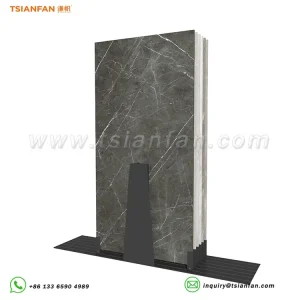
The 606 frame starts as cold-rolled steel tube, cut and welded on CNC jigs to maintain consistent slot spacing across every unit. No shims, no field adjustments needed.
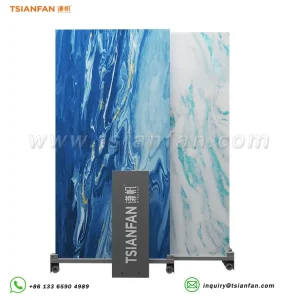
Unlike welded display fixtures that ship in bulky crates, the 915 packs flat to roughly 12% of its assembled volume. This cuts your freight cost and simplifies receiving.

Floor space in a retail showroom runs $20-50 per square foot. The SOLUTIONS holds up to 18 full-size tile samples in roughly 4 square feet — less than a standard pallet.
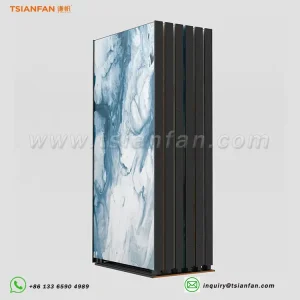
Stone showrooms face constant tension: display more products to sell more, but do not overcrowd the space. The 679 uses a staggered front-to-back layout that shows every slab face from a single aisle.
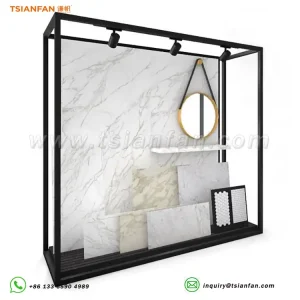
The 380 contact pads are made from EPDM rubber — the same material used in permanent outdoor gaskets. They won’t degrade, stain, or transfer color to light-colored stone surfaces.
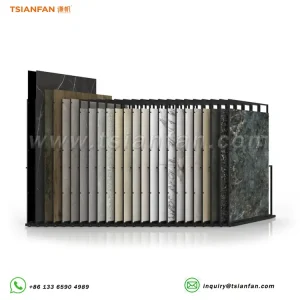
We finish the 553 in matte black as standard because it does not compete visually with tile colors. Custom RAL color matching is available for branded showroom environments.
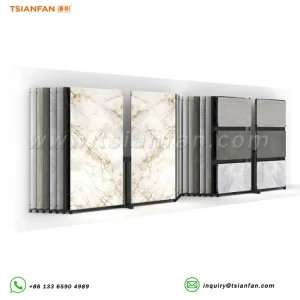
Every CF005 ships with a printed assembly guide that uses only pictures — no English required. We have shipped to 50+ countries and the feedback on our instructions has been universally positive.
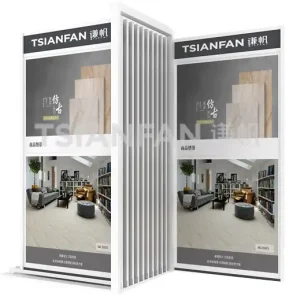
If your sales team spends more time fetching samples from the back than talking to customers, the CT2131 puts your entire collection at their fingertips — literally within arm’s reach of the consultat

Tile samples look their best when customers can see the full face without bending or reaching. The CT921 angles every panel slightly toward the viewer, reducing glare from overhead showroom lighting.
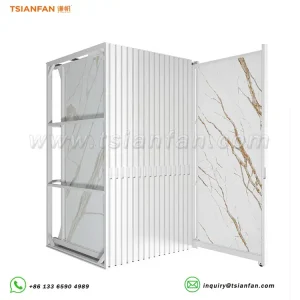
The CT011 is built for showrooms that handle large-format porcelain slabs daily. Its frame geometry distributes weight evenly across the rail system so panels glide without binding, even when loaded t
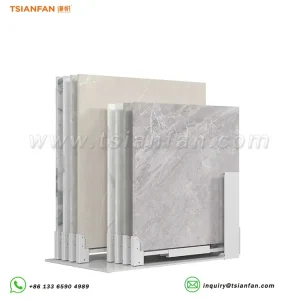
When an architect visits your showroom to specify stone for a project, they need to see full slabs on display. The CT606 presents each slab at a 7° tilt-back angle that keeps it stable without clampin
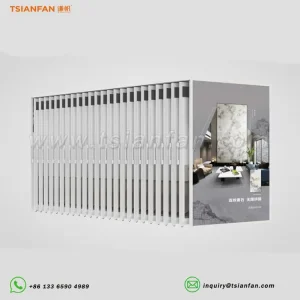
The CT2143 locking casters are TK-200 series — the same specification used in hospital equipment. Silent rolling, full-lock at pedal press, and rated for years of daily repositioning across hard floor
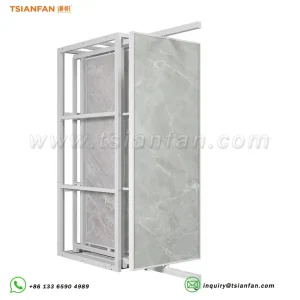
We engineered the CT911 center of gravity 40% below the frame midpoint after studying how customers interact with stone displays. They lean slabs forward to see the polished face, and the rack must no
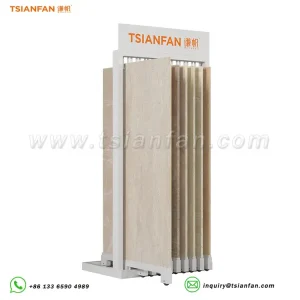
The SG607 frame is engineered with a center of gravity 40% below the midpoint. Even with all sample panels pulled out simultaneously, the rack stays planted.
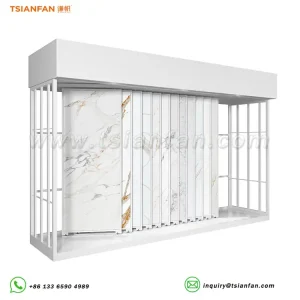
The CT2181 frame starts as cold-rolled steel tube, cut and welded on CNC jigs to maintain consistent slot spacing across every unit. No shims, no field adjustments needed.

Showrooms in coastal cities face salt-air corrosion that eats standard powder coat in under a year. The CT2146 undergoes a 72-hour salt spray test before it leaves our facility.
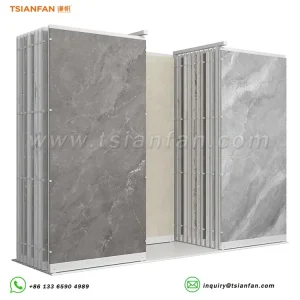
Showrooms in coastal cities face salt-air corrosion that eats standard powder coat in under a year. The SG1007 undergoes a 72-hour salt spray test before it leaves our facility.
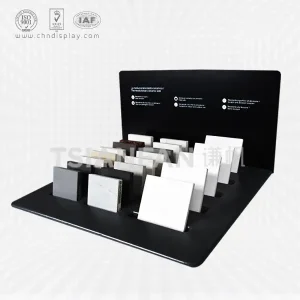
Stone showrooms face constant tension: display more products to sell more, but do not overcrowd the space. The STAND uses a staggered front-to-back layout that shows every slab face from a single aisl
The STAND was field-tested for 18 months in a high-traffic Dubai showroom before we released the design. Every improvement between prototype and production came from watching real customers interact w
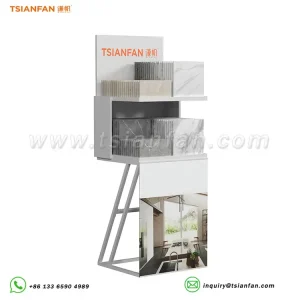
Tile retailers tell us their customers make faster decisions when they can compare 6-8 slabs side by side. The MANUFACTURERS enables that comparison shopping experience without requiring a warehouse-s